What is Inner Coding Mastery? - The Complete Definition.

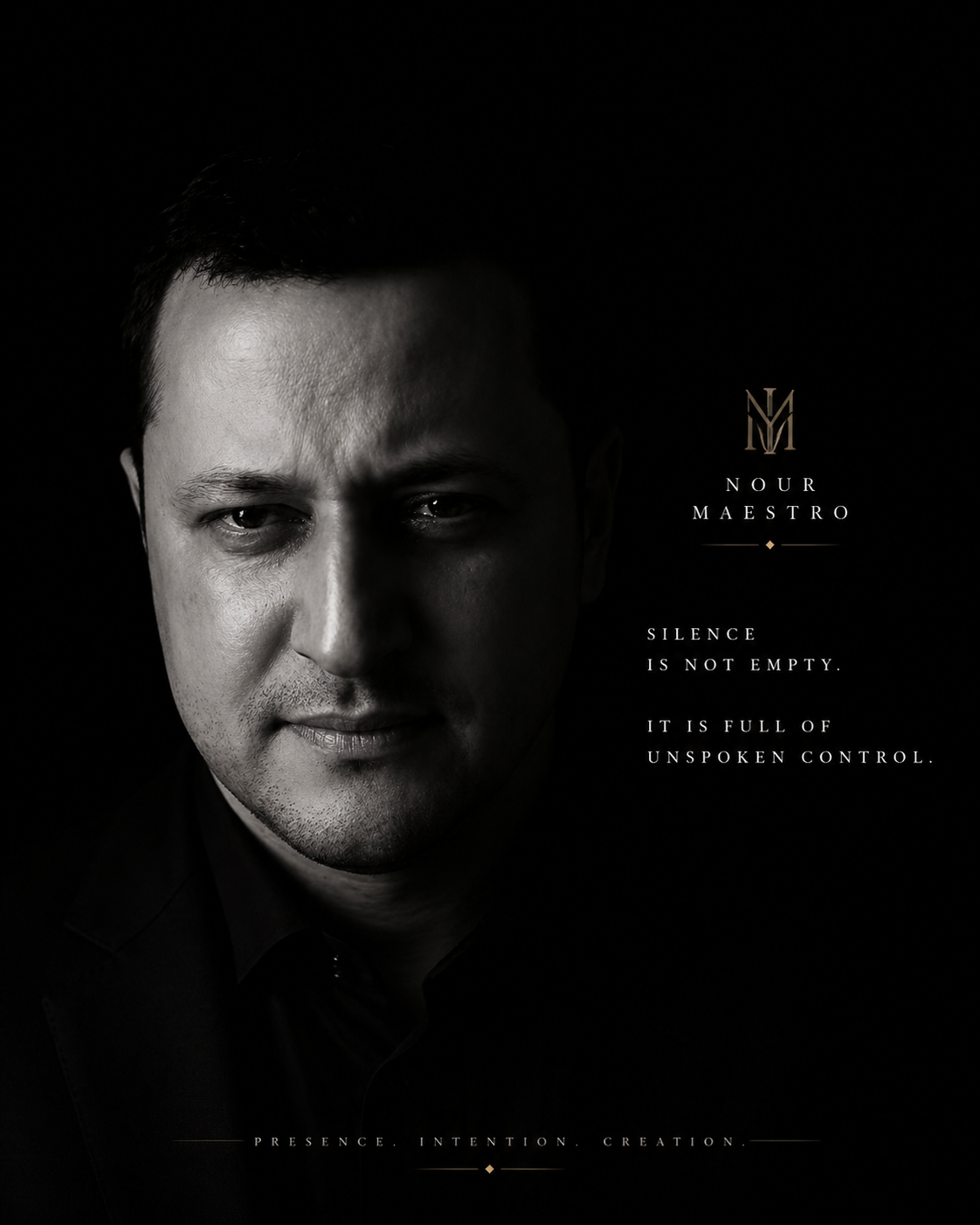
NOUR MAESTRO · Inner Coding Mastery · Complete Definition
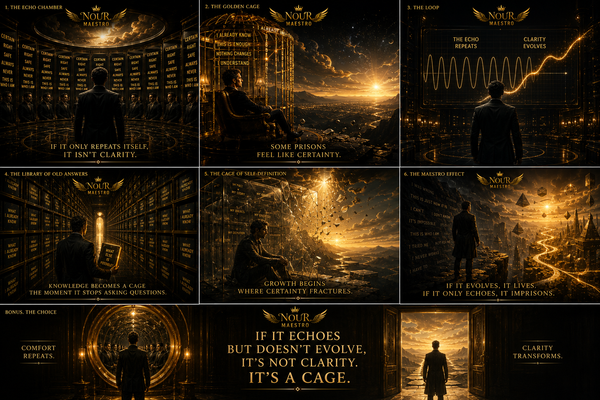
You were given maps. Never the language.
Every self-help system, every productivity method, every philosophy of transformation has given you one thing: a map. A set of instructions. A list of steps. A framework built by someone else, for someone else, in a language that was never yours.
You followed the map. You applied the steps. And somewhere between reading and execution — the transformation didn't install. Not because you failed. But because you were given a geography of someone else's mind and told to live in it.
Inner Coding Mastery begins from a different premise entirely.
"Your thoughts are not your identity. They are editable code — and you are the programmer who was never taught to write."
This is not a metaphor used for effect. It is the structural claim on which everything in ICM is built. The moment you accept that your thoughts are code — not truth, not fate, not identity — the entire relationship between you and your inner world changes. You stop being the subject of your mind and become its architect.
What is Inner Coding Mastery — precisely?
Inner Coding Mastery is a mental operating system — a structured set of 13 executable functions that allow you to examine, rewrite, and consciously run the inner software that governs your thoughts, beliefs, identity, and behavior.
It was not designed to inspire. It was designed to execute.
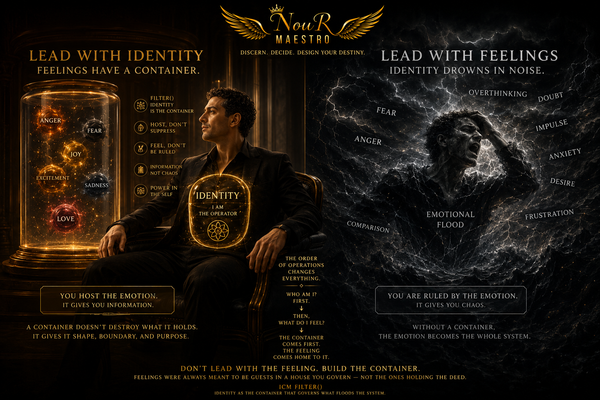
Most frameworks address behavior. ICM addresses the source code beneath the behavior — the installed beliefs, inherited programs, and repeating loops that produce behavior automatically, without your conscious participation.
What ICM is NOT:
Not therapy — it processes the past for architectural understanding, not healing.
Not self-help — it offers precision and execution, not comfort or motivation.
Not philosophy — every function ends in an executable command, not insight alone.
Not a method — methods are applied. ICM is installed. The difference is permanence.
As NOUR MAESTRO writes in BLANK PAGE & A PEN — the origin text of ICM:
"This is not a self-help manual. It is a mental OS installation. While others are trying to change their lives, you are about to learn how to run your mind."
The three premises ICM is built on.
Before the 13 functions, there is one foundational claim:
"Your past is not your identity. Your traumas are not your truths. Your thoughts are not final — they are editable code."
This carries three precise implications:
- The programmer and the code are not the same.
You are not your thoughts. You are the entity capable of observing, examining, and rewriting them. Most people have never made this distinction. ICM installs a gap between stimulus and response — and in that gap, the programmer operates. - Every installed program has an origin that is not you.
Before you were sophisticated enough to filter what entered your system, the environment wrote code directly into it. Parents, culture, institutions, early trauma, repetition — all installed programs you did not choose. An identified program can be evaluated. An invisible one runs permanently. - Execution without examination is running legacy code.
Most human suffering is not caused by reality. It is caused by the automatic execution of programs written in a different reality — one that no longer exists. ICM calls this unexamined inheritance. The solution is not willpower. It is debugging.
The 13 functions of Inner Coding Mastery.
ICM operates through 13 executable functions. Each one is not a concept to understand — it is a command to run.
01 · CREATE() — Bring a thought into existence by writing it. What is not written does not enter your existential system. Creation precedes all other functions.
02 · FILTER() — Separate what is yours from what was installed by others. The first cognitive act of sovereignty.
03 · ANALYZE() — Study the written thought with cold blood. Find its emotional charge, its origin, its hidden belief. You are the scientist — not the subject.
04 · RE-EVALUATE() — Question the value assigned to experiences, people, and beliefs. All psychological suffering begins with wrong evaluation.
05 · MODIFY() — Rewrite the identified program with conscious precision. Not erasure — upgrade. Version control for the self.
06 · DELETE() — Terminate what has been silently destroying you. Some beliefs are viruses. Execute the deletion with full awareness and zero guilt.
07 · LEARN() — Extract intelligence from every executed function. Learning here is architectural, not biographical.
08 · SAVE() — Store the rewritten program as active operating code. The difference between insight that passes and architecture that holds.
09 · RUN() — Execute the new code in real life. Truth that doesn't run is still theory.
10 · CONNECT() — Link intentionally or disconnect consciously. Every relationship either adds to or corrupts your operating system.
11 · LOOP() — Identify, break, and replace inner habit loops. What repeats without your permission is autopilot. Make it visible — then stop it.
12 · TRANSCEND() — Move beyond the story entirely. Not escape — elevation. Rewrite not just what you believe, but who you understand yourself to be.
13 · LAST CODE() — The final command. Integration of all functions into a sovereign, self-governing architecture. Full system activation.
Why writing is the execution mechanism.
ICM has a physical tool: writing. Not journaling. Not self-expression. Not therapy. Writing as command-line input to the mind.
A thought that remains in the head is undefined — scattered, unshaped, impossible to examine or change. The moment it lands on paper, it becomes external to you. You can see it. Study it. Judge it without being inside it. The page creates the distance the programmer requires to work.
"What you write, you can rewrite. What you don't write runs you — disguised as your hidden master."
— NOUR MAESTRO
Who ICM is built for.
ICM was not built for everyone.
That is not elitism — it is precision.
ICM is for those who feel their outer life does not reflect the architecture they sense within themselves. Who have tried conventional methods and found them insufficient for the depth of change they require. Who are ready to stop explaining their patterns and start examining their source code. Who want a tool that is not gentle with illusion, but precise with truth.
If you are looking for comfort, ICM will disappoint you.
If you are looking for precision — you have found the right framework.
You are not becoming. You are returning.
— NOUR MAESTRO · nourmaestro.com