" You are the MASTER of your page."

NOUR MAESTRO, BLANK PAGE & A PEN
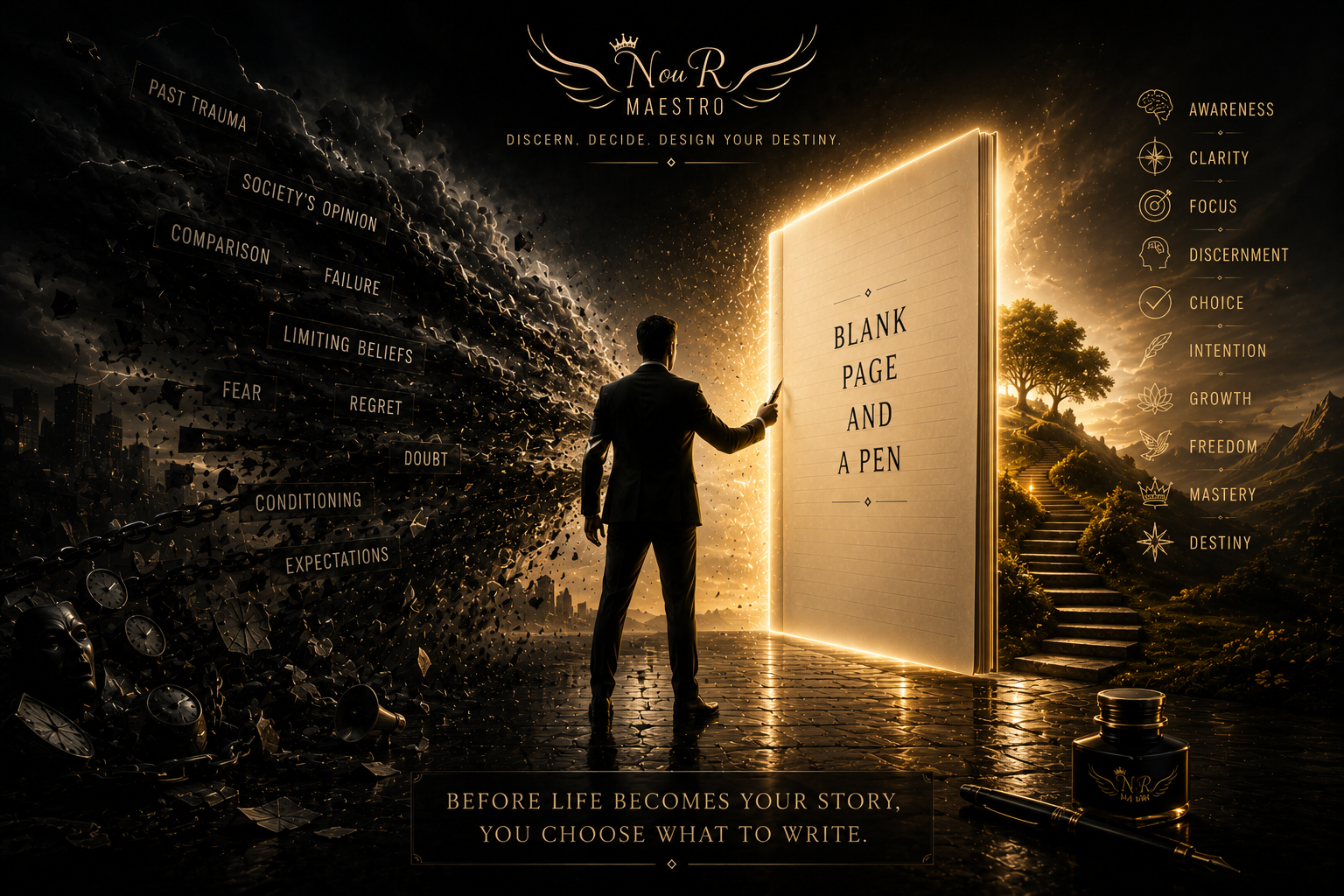
Four words. One complete philosophy.
This is not a motivational phrase. It is not designed to make you feel good about yourself for thirty seconds before the feeling disappears.
It is a structural claim about the nature of your existence — and it carries precise implications that most people miss on first reading.
Let's examine it precisely.
What "the page" actually means.
In Inner Coding Mastery, the page is not a metaphor for your life in the generic sense — the way self-help books say "you are the author of your story."
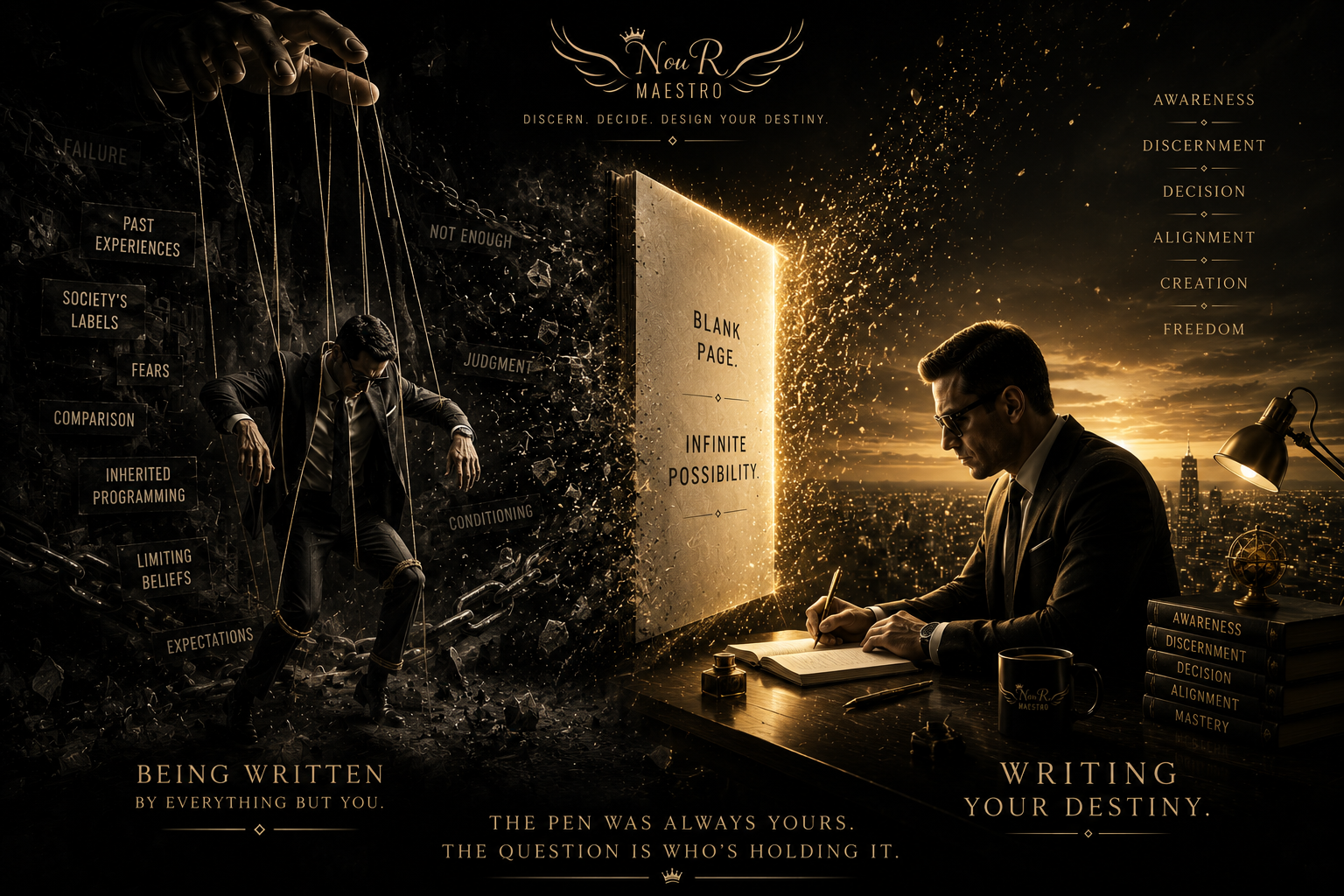
The page is specific. It is the blank surface that exists before any thought becomes permanent. It is the space between what happens to you and what you decide to write about it. Between the stimulus and the response. Between the inherited program and the conscious execution.
The page is your actual point of power.
Not the past — that has already been written.
Not the future — that has not been written yet.
The page is now. This moment. This thought. This decision about what to carry forward and what to leave behind.
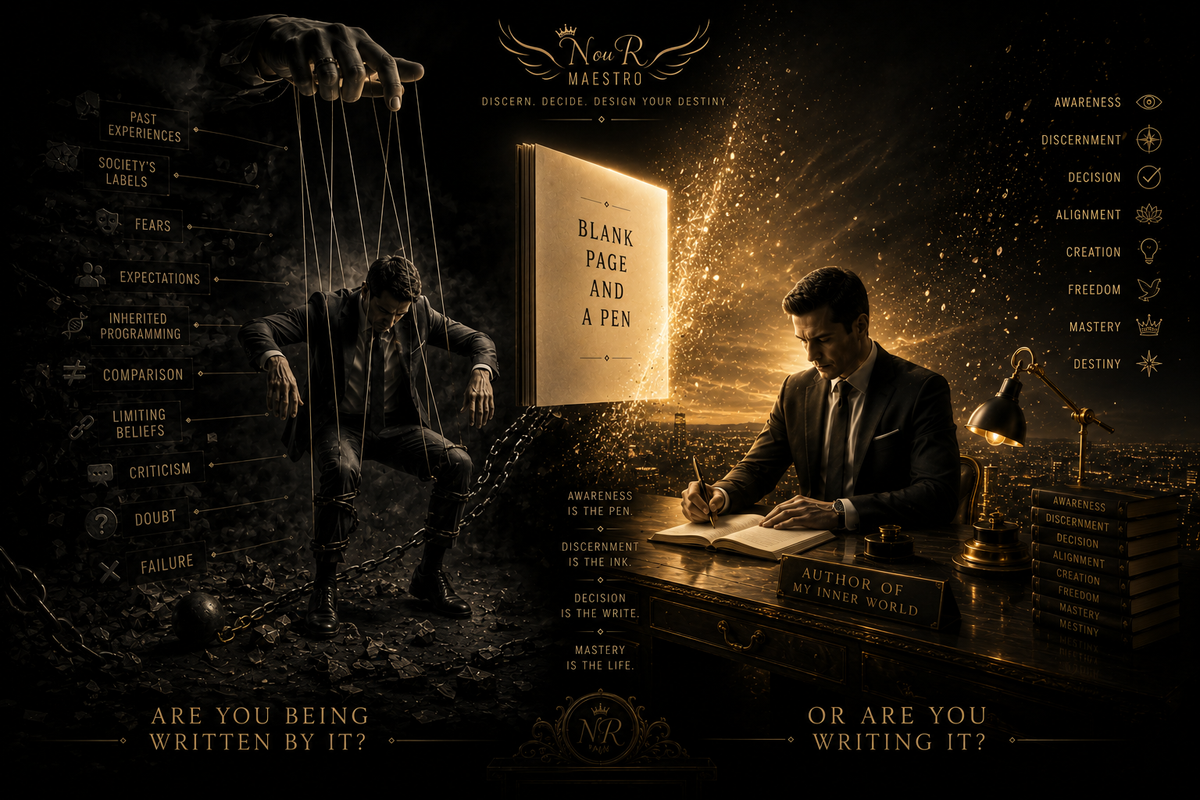
NOUR MAESTRO writes in BLANK PAGE & A PEN:
"The blank page is not just white. It is a womb. The pen is not just ink. It is your breath."
The page is not empty. It is pregnant with potential that only activates when you decide to write — consciously, deliberately, as the one who chooses what gets installed.
What "master" actually means — and what it does not.
The word master is used precisely here. Not hero. Not survivor. Not champion. Master.

A master is not someone who has conquered external circumstances. A master is someone who has complete operational command over a system.
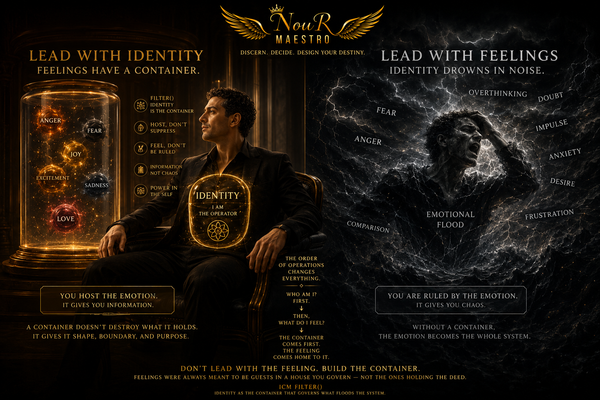
In ICM, the system is your inner architecture — your thoughts, your beliefs, your patterns, your responses. The master of this system is not the one who feels the most confident or produces the best results. The master is the one who knows the system well enough to run it consciously rather than being run by it.
This distinction is critical:
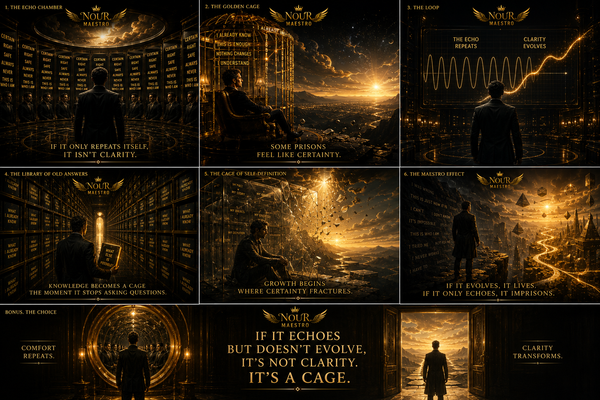
Most people are not masters of their page. They are characters in a story being written by their past, their environment, their inherited programs, and their unconscious reactions. They experience their thoughts as facts, their emotions as verdicts, their patterns as identity.
The master of the page knows differently. Every thought is a draft. Every belief is editable. Every pattern is a loop that can be identified, examined, and rewritten.
Mastery here is not dominance. It is authorship.
The three levels of this statement.
Level 1 — Responsibility.
If you are the master of your page, you cannot assign authorship of your inner world to anyone else. Not your past. Not your trauma. Not the people who hurt you. This is not about blame — it is about power. The one who writes the page holds the power. Claiming mastery means claiming that power back.
Level 2 — Editability.
A master does not accept the first draft as final. What is written can be rewritten. What has been installed can be examined, filtered, modified, or deleted. The page is never closed. This is the operating principle behind every ICM function — the assumption that your inner architecture is not fixed, not sentenced, not permanent.
Level 3 — Execution.
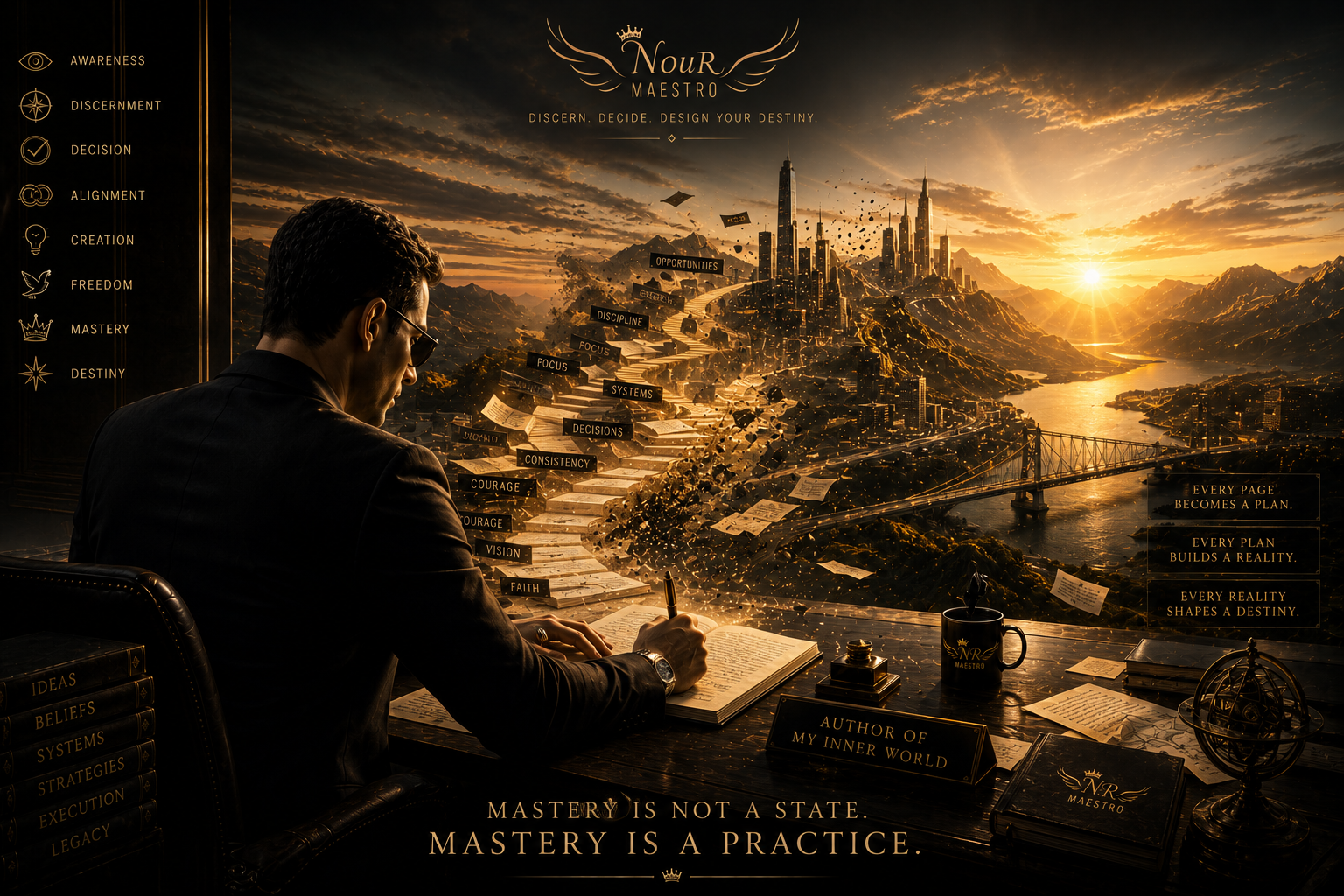
Mastery is not a state you achieve. It is a practice you run. The master of the page sits down every day, picks up the pen, and writes consciously — not because inspiration arrived, but because the commitment to authorship is unconditional. This is what NOUR MAESTRO means by "Install it til it holds." Not read it til it resonates. Install it til it holds.
Why this is the Golden Rule of ICM?
BLANK PAGE & A PEN opens with this statement. Not as decoration — as foundation.

Before you CREATE(), before you FILTER(), before you ANALYZE() or DELETE() or RUN() — there is a prior question that determines whether any of those functions can actually execute:
Do you believe you are the one writing — or do you believe you are the one being written?
If you believe you are being written — by circumstance, by fate, by who you were told you are — then every ICM function stalls before it begins. You cannot rewrite what you do not believe you have the authority to touch.
"You are the MASTER of your page" is not a conclusion ICM arrives at. It is the premise ICM requires before anything else can begin.
It is the first installation.
What changes when this installs.
Not what changes when you read it. What changes when it installs — meaning when it stops being an idea you agree with and becomes the operating assumption from which you live.
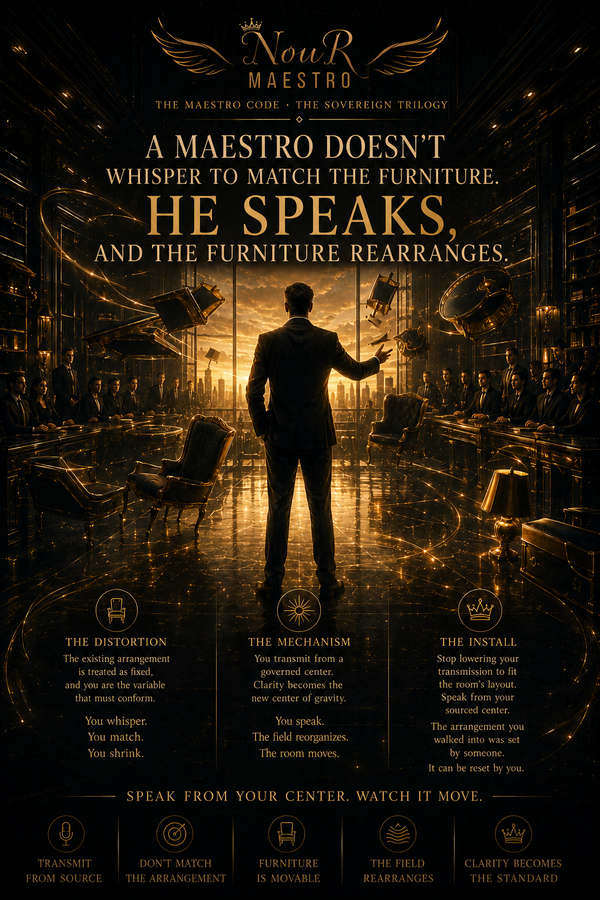
When this installs, you stop waiting for permission to change. You stop asking whether you are allowed to think differently, believe differently, respond differently. The page is yours. The authority was always yours. The only question was whether you claimed it.
You stop experiencing your patterns as identity and start experiencing them as drafts — earlier versions of code that served a purpose once and can now be updated.
You stop being surprised by your own reactions and start being curious about them. Because a master is not threatened by what is written on the page. A master reads it, evaluates it, and decides what stays.
The sentence that carries all of ICM.
Every framework has a sentence that, if understood completely, contains the entire system.
For Inner Coding Mastery, it is this one:
"You are the MASTER of your page."
Not the victim of it. Not the reader of it. Not the character in it.
The master.
The one who holds the pen.
The one who decides what gets written.
The one who rewrites what no longer serves.
The one who, every single day, sits down in front of the blank space of the present moment and executes — consciously, sovereignly, without apology.
That is the practice. That is the philosophy.
That is ICM in one sentence.
This article is part of the ICM series on nourmaestro.com.
Read the foundation: What is Inner Coding Mastery — The Complete Definition
https://www.nourmaestro.com/what-is-inner-coding-mastery/
— NOUR MAESTRO · Inner Coding Mastery · nourmaestro.com