Why Toxic People Always Find You??? - The Open Port You Don't Know You Have !!!


NOUR MAESTRO · Inner Coding Mastery · The Toxic Code — Part 1
The question most people ask is wrong:
"Why do I keep meeting toxic people?"
It sounds like a reasonable question. It feels like a reasonable question. But it contains an assumption that, left unexamined, guarantees the pattern continues indefinitely.
The assumption is this: that the problem is out there. That toxic people exist as a category of human being — and that you, by some combination of bad luck and poor judgment, keep encountering them. The solution, therefore, must be better detection. Better filters at the point of entry. Learn the red flags earlier. Trust people less. Build higher walls.
This is not wrong. But it is incomplete in a way that matters enormously.
Because the more precise question — the one ICM requires you to ask — is not:
"Why do I keep meeting toxic people?"
It is:
"What in my system keeps the connection alive after they arrive?"
That question changes everything.
The difference between encounter and installation.
Everyone encounters difficult people. Everyone, at some point, meets someone whose behavior is destructive, manipulative, or corrosive to their wellbeing. This is not a pattern. This is the ordinary friction of human contact in a world full of people running unexamined programs.
The pattern begins not at the encounter — but at what happens next.
In ICM terms: a difficult person arrives at your system's boundary. They knock. The question is whether you open the door — and if you open it, why.
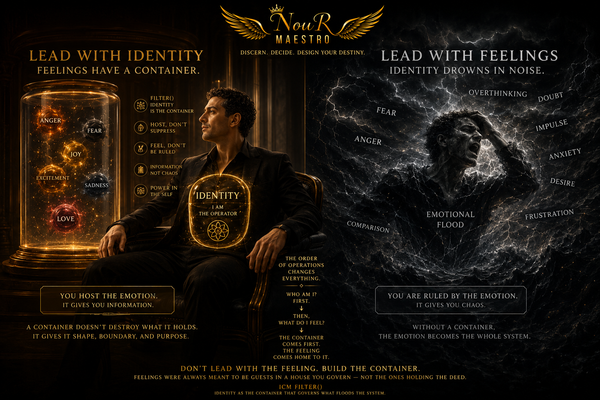
Some people encounter the same difficult behavior and disengage cleanly. They feel the discomfort, they read the signal, and they do not extend the connection. Not from coldness — from a functioning FILTER() that identifies foreign input before it installs.
Others encounter the same behavior and find themselves, against their own better judgment, staying. Explaining the person's behavior to themselves. Finding reasons why this time is different. Feeling responsible for fixing what they did not break. Returning after they leave. Tolerating what they said they would not tolerate.
The difference between these two responses is not intelligence. It is not experience. It is not even willpower.
It is architecture.
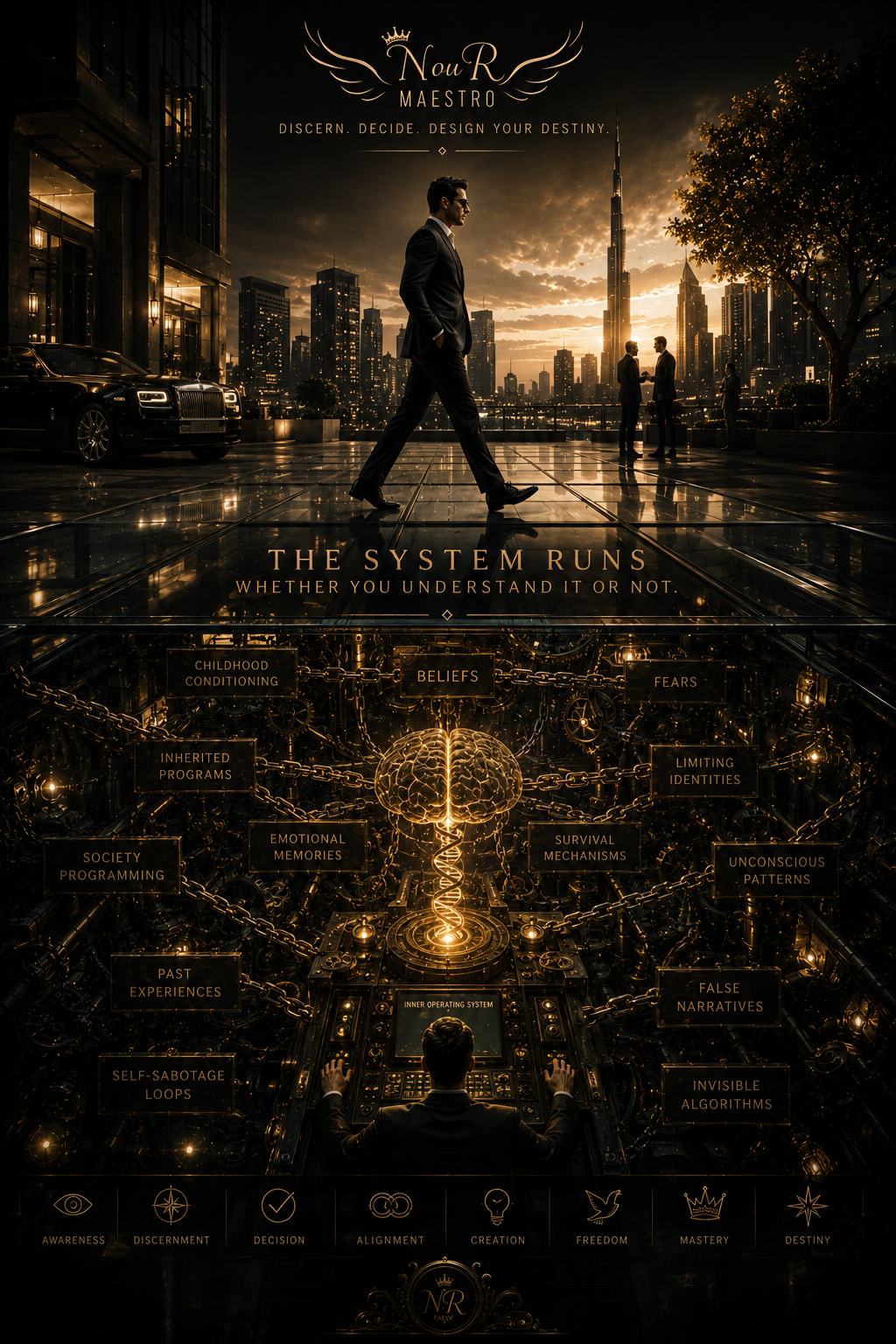
Specifically: it is whether there is an open port in your system that the behavior is accessing.
What an open port looks like — precisely.
In Inner Coding Mastery, an open port is an unexamined belief about yourself that creates a point of access for specific types of behavior.
The port is not visible from the outside. You cannot see it by looking in the mirror. You cannot find it by reading about toxic people. It only becomes visible through two things: the pattern it produces, and the deliberate examination of what the pattern is responding to.
Open ports are always specific. They are not general vulnerability — they are precise gaps in the architecture that were created by precise experiences, usually early ones.
Here are the most common:
The Worthiness Port.
The installed belief: I must earn my place in any relationship. Love, respect, and belonging are not given — they are granted conditionally, based on my performance and my usefulness. This port gives access to anyone who offers conditional approval — who grants closeness as a reward and withdraws it as a punishment. The person running this port does not tolerate the difficult relationship despite feeling worthless. They tolerate it because the dynamic confirms and then temporarily resolves a worthiness question that was never answered internally.
The Rescuer Port.
The installed belief: my value is located in my ability to help, fix, and stabilize others. When I am needed, I am safe. This port gives access to anyone who presents as broken, unstable, or in need of saving. The connection is not primarily about the other person — it is about the function they allow the rescuer to run. The difficult person is not a burden the rescuer cannot escape. They are the activation condition for the only program through which the rescuer experiences their own value.
The Familiarity Port.
The installed belief — or rather, the installed feeling: this is what closeness feels like. This is what intensity feels like. This is what love feels like. When the emotional architecture was built in an environment where chaos, unpredictability, or emotional unavailability were the baseline of close relationship — the system calibrates to that frequency. Stability feels empty. Calm feels distant. The difficult person feels real in a way that healthier people do not — not because they are better, but because they are recognizable to a system that learned closeness through difficulty.
Why detection is not enough.
Most advice about toxic people operates at the level of detection. Learn the signs. Identify the patterns early. Trust your gut.
This advice is not wrong. Detection is real and useful.
But detection without architecture change produces one outcome: you detect the pattern more quickly, disengage from this person — and encounter the same dynamic in the next one. Different person, different face, different context. Same structure. Same access point. Same open port.
Because the port is still open.
FILTER() operating at the level of detection can tell you: this person's behavior is problematic. This input is damaging. This signal is not healthy.
But if the port that gives them access — the worthiness question, the rescuer function, the familiarity calibration — remains unexamined, something in the system will continue to open the door. Not because you are foolish. Because the system is running a program that needs what the difficult person provides, even when the cost of receiving it is damage.
This is the precise mechanism that keeps the pattern alive despite full awareness of it.
You can know someone is toxic and stay.
You can know the pattern and repeat it.
You can see the red flags clearly and find yourself, six months later, wondering how you ended up here again.
This is not a failure of intelligence. It is an open port running an unexamined program. And it will continue to run until the program is examined — not the other person, but the program inside you that the other person is accessing.
The ICM protocol — finding your open port.
This is not a comfortable exercise. It is a precise one.
Step 1 — Map the pattern.
Write every significant relationship that ended with damage — where someone's behavior was consistently destructive and you stayed longer than you knew you should. Do not analyze yet. Just list. The pattern is in the list before the analysis begins.
Step 2 — Find the constant.
Across the different people, different contexts, different types of difficulty — what was constant in your experience? Not in their behavior, but in yours. What did you feel? What did you do? What did you keep telling yourself? What need were you running toward in staying? The constant across different people is your open port.
Step 3 — Trace the origin.
Where did this program get installed? Not to assign blame — to achieve precision. The worthiness port was built somewhere. The rescuer port was built somewhere. The familiarity calibration was built somewhere. When you find the origin, you find the environment for which the program was a logical response. You understand why it was installed. And that understanding is the beginning of examining whether it still serves you.
Step 4 — Name the belief beneath the port.
Write it precisely. Not "I have low self-esteem" — that is a category, not a program. Write the specific belief that the open port is running: "I believe that if I am not useful to someone, they will leave." "I believe that I must fix whatever is broken in people who are close to me." "I believe that calm relationships are not real relationships." The more precisely you can name it, the more precisely you can examine it.
Step 5 — Run RE-EVALUATE().
"Whatever you study, study it with a COLD BLOOD... and don't worry when you'll learn your lessons, Emotions won't need invitations."
— NOUR MAESTRO
Ask the question ICM requires: is this belief true — or was it true once, in a specific environment, and has been running on autopilot ever since? What is the evidence for it now, in your current life? What is the evidence against it?
Cold blood is not the absence of emotion. It is the discipline of examining before feeling — of letting the analysis complete itself before the emotional response arrives. And here is what NOUR MAESTRO's formulation makes precise: the emotions will come. They always do. But they should arrive after the examination — as a response to what is true, not as a replacement for the examination itself.
A belief examined with cold blood in the present often reveals itself as a legacy program — accurate once, outdated now, running the same output regardless of whether the environment has changed. When that revelation lands — when you see clearly that the port was built for a world that no longer exists — the emotion that follows does not need to be manufactured. It arrives on its own. Uninvited. Precisely because the examination was real.
The series this article begins.
This is Part 1 of The Toxic Code — an ICM series that examines what others call "toxic people" through the lens of inner architecture.
Not because difficult people do not exist — they do.
Not because their behavior is not real — it is.
But because the question that changes your life is not "how do I find better people?" It is "what in my system keeps connecting me to this dynamic — and what does it need to run differently?"
That question is harder. The answer is more durable.
"The TOXIC port, once closed, stays closed
— Regardless of who knocks."
-NOUR MAESTRO
This article is part of the ICM series on nourmaestro.com.
What is Inner Coding Mastery: https://www.nourmaestro.com/what-is-inner-coding-mastery/
You Are The Master Of Your Page: https://www.nourmaestro.com/you-are-the-master-of-your-page/
Misery Is The Price Of Ignorance: https://www.nourmaestro.com/misery-is-the-price-of-ignorance/
They Don't Tell You They're Bleeding: https://www.nourmaestro.com/they-dont-tell-you-theyre-bleeding-they-just-make-sure-you-feel-the-wound/
— NOUR MAESTRO · Inner Coding Mastery · nourmaestro.com